A gorgeously-written exploration of the natural world and the peril of ignoring our disappearing forests
One of the world's experts on how trees chemically affect the environment, Canadian scientist Diana Beresford-Kroeger is on a mission to save the planet- one newly planted tree at a time. In this new book, she skillfully weaves together ecology, ethnobotany, horticulture, spirituality, science, and alternative medicine to capture the magic spell that trees cast over us, from their untapped ecological and pharmaceutical potential to the roles they have played in our cultural heritage. Trees not only breathe and communicate; they also reproduce, provide shelter, medicine, and food, and connect disparate elements of the natural world. In celebrating forests' function and beauty, Beresford-Kroeger warns what a deforested world would look like. Her revolutionary bioplan proposes how trees can be planted in urban and rural areas to promote health and counteract pollution and global warming, maintaining biodiversity in the face of climate change.
Presented in short interconnected essays, The Global Forest draws from ancient storytelling traditions to present an unforgettable work of natural history. Beresford-Kroeger is an imaginative thinker who writes with the precision of a scientist and the lyricism of a poet. Her indisputable passion for her subject matter will inspire readers to look at trees with newfound awe.
Customer Reviews
*** Product Information and Prices Stored: Mar 17, 2012 08:26:05
The two aspects of our environment most invoked when we talk about holding the environment clean are litter and water pollution. We will discuss both in this article.
Litter
About Global Warming Essay Best Buy
Litter is ugly and it can harm population and wildlife. Picking up litter can be costly for cities and highway departments.
How to Keep the Environment Clean
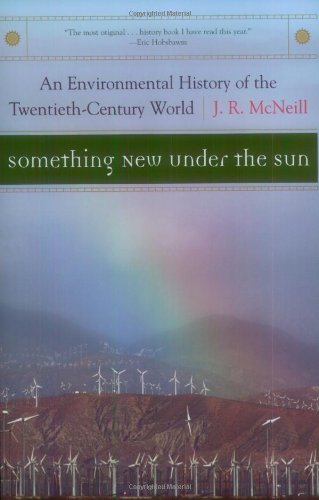
Something New Under the Sun: An Environmental History of the Twentieth-Century World (Global Century Series) Best
Rate This Product :
Something New Under the Sun: An Environmental History of the Twentieth-Century World (Global Century Series) Overview
"Refreshingly unpolemical and at times even witty, McNeill's book brims with carefully sifted statistics and brilliant details."—Washington Post Book World
The history of the twentieth century is most often told through its world wars, the rise and fall of communism, or its economic upheavals. In his startling new book, J. R. McNeill gives us our first general account of what may prove to be the most significant dimension of the twentieth century: its environmental history. To a degree unprecedented in human history, we have refashioned the earth's air, water, and soil, and the biosphere of which we are a part. Based on exhaustive research, McNeill's story—a compelling blend of anecdotes, data, and shrewd analysis—never preaches: it is our definitive account. This is a volume in The Global Century Series (general editor, Paul Kennedy). 40 b/w photographs, 15 maps
Something New Under the Sun: An Environmental History of the Twentieth-Century World (Global Century Series) Specifications
J.R. McNeill, a professor of history at Georgetown University, visits the annals of the past century only to return to the present with bad news: in that 100-year span, he writes, the industrialized and developing nations of the world have wrought damage to nearly every part of the globe. That much seems obvious to even the most casual reader, but what emerges, and forcefully, from McNeill's pages is just how extensive that damage has been. For example, he writes, "soil degradation in one form or another now affects one-third of the world's land surface," larger by far than the world's cultivated areas. Things are worse in some places than in others; McNeill observes that Africa is "the only continent where food production per capita declined after 1960," due to the loss of productive soil. McNeill's litany continues: the air in most of the world's cities is perilously unhealthy; the drinking water across much of the planet is growing ever more polluted; the human species is increasingly locked "in a rigid and uneasy bond with modern agriculture," which trades the promise of abundant food for the use of carcinogenic pesticides and fossil fuels.
The environmental changes of the last century, McNeill closes by saying, are on an unprecedented scale, so much so that we can scarcely begin to fathom their implications. We can, however, start to think about them, and McNeill's book is a helpful primer. --Gregory McNamee
Customer Reviews
*** Product Information and Prices Stored: Mar 14, 2012 05:32:19
Dog fouling in group places (another form of litter) is a serious condition risk, particularly for young children.
Cigarette butts are other unpleasant form of litter. They may seem small, but with several trillion butts littered every year they are the estimate one source of litter in this county. Cigarette butts make up a large part of much urban litter and they can take up to 12 years to break down.
So how do we keep litter off our group places and keep the environment clean?
The reply is, of course, firstly educate the group to take their litter home, and when they do not, it is essential to ensure that efficient street cleaning is provided.
Street cleaning is controlled by the agency of group Works in all towns and cities and is normally removed by appointed contractors or the Council's own direct labor force. When it works well you will normally find that the local businesses take an active interest in assisting in streamlining the process with also making further regular consultation with the community. street cleaning is often, but not always, carried out for extended hours, and these hours may range from 8 am until 12 or 2 pm in our big cities. street cleaning is an absolute necessity in all modern well run cities.
Street cleansing is a manual task and labor is a essential cost. Pleasure with the cleanliness of streets and industrial areas has improved in the Uk since privatization. One hypothesize likely for this is that previously the Council's staff had to be the policemen ensuring the efficiency of their own work. Human nature is such that to be on both sides of such a role seldom works efficiently.
Street cleansing is only a part of city housekeeping which in this report is just a part of how to keep the environment clean. The council (municipal) condition department's firm is to see that all the population have pure air, pure water, pure food, and are protected from contagious diseases.
Street cleaning is an foremost element of city housekeeping and is in case,granted more and more by highly mechanized equipment such as through the use of street sweepers and flushers. Most streets are scheduled for cleaning at least five times per year, and paved alleys are cleaned once.
Street cleaning must all the time be strictly enforced, and react to events when litter will build up more quickly, but without clean water in the rivers and streams throughout the city the municipal authorities could hardly be said to be holding the environment clean.
River Pollution
The avoidance of river pollution is if anything more essential than street cleansing, especially where the poorer population must rely on the river water for domestic and even drinking water use.
If asked how to keep the environment clean from river pollution we would have to say by collecting all sewage and treating it before allowing it to discharge back into the river downstream.
River pollution is the most devastative phenomena to condition in the poor and developing. Pollution is occurring when the water shows an alteration of physical and chemical parameters such as odor, taste, colour, turbidity.
If polluted water is tested in a water potential diagnosis laboratory there are a estimate of tell-tale changes you will notice. These are exemplified by changes in total hardness, pH, chlorides etc. Expect to see Bod, and Cod in increased quantities as well, among others.
River pollution is a serious problem. In modern years there has been a growing awareness of the issues complicated but, at the same time, continued urbanization and industrialization and the continued increase of population produce ever-increasing amounts of waste for disposal.
Dangerously, River pollution is concentrated colse to urban areas. River Pollution is a major environmental qoute today, but we don't seem to be making as much progress as we should. Possibly the hypothesize is ideological?
Where sewage medicine plants have been installed the levels of indicator bacteria and nitrogen in the discharge should be tracked to portion administration performance. If a failure in discharge potential occurs the municipal authorities must act to conclude changes needed in monitoring protocol to avoid any further occurrences. It is foremost to also report progress and recommendations to advise planning and administration decision-makers. Levels of any pollutant can be measured by water potential testing methods, and once the diagnosis has been in case,granted it is all the time foremost to check the data thought about against the legal standards. For example, the State of Florida sets the safe condition accepted for bacteria as less than 1000 faecal coliform bacteria per 100 milliliters.
The most base sources of pollution are domestic water discharges from the houses in the catchment area, and uncontrolled dumps of solid domestic wastes along tributary banks and in dry ravines. industrial discharge can be a major cause of pollution. Each industrial discharge normally contains chemicals and organic compounds which can enter the bodies of many aquatic animals. Even ground water can be polluted from the soakage pits, septic tanks, manure, garbage, etc. And that ultimately discharges to the rivers still worsening the problem.
Industrial pollutants from smaller units continue to be a problem. While most of the large and medium industrial units have put up medicine plants and are using them. 40 per cent of the industrial waste seen in one example - a whopping 4000 mld - is from small scale industries in cities and residential colonies.
How to Keep the Environment CleanThe Process of Service-Learning: Meeting National Priorities and Improving Results Video Clips. Duration : 62.72 Mins.
During this one-hour webinar, take a tour of the revised second edition of The Complete Guide to Service Learning: Proven, Practical Ways to Engage Students in Civic Responsibility, Academic Curriculum & Social Action with author and international service-learning expert Cathryn Berger Kaye. Her guidance will provide you time-saving insights and tools, show you extensive resources that maximize academic connections, increase youth voice, add meaning and purpose, develop reciprocal benefits with your partners, and bring learning to life! As you address the national focus areas, dive into the National Learn & Serve Challenge, work toward a Semester of Service, or ensure that your service-learning integrates critical thinking, skill development, and well-integrated curriculum, this webinar is for you!
The word "Green" is not the omni-term for whatever environmental although there is the tendency to substitute the word "Green" for "Environmental." Environmentalism is to grand topic that has some subdivisions. Under this grand topic o environmentalism, we will find Green, Sustainable, Pollution, and Conservation. Each one of these subdivisions are weighty field on their own.
In the mash-up of words and concepts, we have lost the fundamental meaning of Green. Environmental, Green, or Sustainable now blur into that ugly green color that we made in kindergarten when we slurred all the colors into one big blob. We cannot improve when blurring reigns, and every science starts out with a definition of terms.
About Global Warming Essay Best Buy
The best definition of Green refers to the condition impact of what we do on living things. So Green is primarily a health-related issue. This is seen in the fact that cleaning products were the early Green issues. In fact, indoor air capability is a big factor in Green buildings. Sick construction syndrome was the consequent of poor indoor air quality, which is the antithesis of Green.
The Definition of Green
Sustainability is also badly morphed into many applications, but essentially deals with the supervision of our resources. This is a complimentary issue to Green, so it a Green and Sustainable business means that the business considers the condition of the workplace as well as the material demands of the business.
The condition of the workplace can be impacted by cleaning products, construction materials, furniture, as well as paint and carpeting. "Outgassing" is a well documented concern. The installation of new carpet, new furniture, new paint, and new wood leave residual fumes as these items continue to dry out. Your senses will betray you because we think that whatever new is clean and healthy, but that is a huge mistake. The varnishes and additives to paint, rug glue, and wood fall under the category of volatile Organic Compounds (Vocs) that are not good for you. If your condition is comprised, these fumes can worsen your condition and hasten disease. If you are healthy, the long term exposure will wear you down in time.
Think of the dust that is recirculated that contains bacteria, virus, dust mite feces and scales, carbon from the copies, and so much more. It is a wonder that we aren't sick all the time except that we are ordinarily salutary and able to live in hostile environments for a long time.
The population who are supposed to help clean our facilities and safe our condition through sanitizing processes are the janitors, but clean does not mean healthy. The ammonia in the window spray is harmful, the zinc in the floor close is bad for humans, the numerous chemicals in the cleansers add to a worsening situation.
Mold is a persistent qoute for many buildings. The mold spores are never good for the workers, and can come to be a crisis concern if untreated. Latent issues remain the in the Hvac ideas as well. It is fair to say that the air of any construction is a kind of "Ground Zero" for any office or business. If the employees are negatively impacted, productivity will fall. Afternoon headache, occasional nausea, and lethargy can be signs of an unhealthy indoor air quality. So, while your construction may be vigor efficient, and you may be conserving water as well as recycling your trash (sustainability issues), the construction may be very un-Green because it is unhealthy.
The Green business League believes that a Green office starts with an insight of the salutary office and a serious look at the components that compromise indoor air quality. Reconsider using a Green certified janitorial service that also uses Green cleaning products, microfiber cloths, and Hepa vacuums. Do not let mold go untreated. Be mindful of all paint, carpet, and furniture used in the installation because they introduce a large volume of gases into the air.
Green is a primarily a health-related issue that blends into the other topics of sustainability, pollution control, and conservation. By dividing out the topics properly, the plan of charge seem much more clear. To charge the issue in a methodic manner, businesses should inspecting "Going Green" first then bright into the sustainable issues. The early disdain for the word Green comes from the anti-business attitudes of ultra-conservationists that needed a target for their vitriol. Green is not an anti-business notion when properly understood. A Green business is one that is a good place for living things in the workplace, in the community, and in the world.
The Definition of GreenAudiobook: Liberty and Tyranny: A Conservative Manifesto by Mark R. Levin Tube. Duration : 5.02 Mins.
Buy full audiobook: www.qksrv.net List of award-winning books/audiobooks: awardwinningaudiobooks.weebly.com Conservative talk radio's fastest-growing superstar is also a New York Times best-selling phenomenon the author of the groundbreaking critique of the Supreme Court, Men in Black , and the deeply personal dog lover's memoir Rescuing Sprite , Mark R. Levin now delivers the book that characterizes both his devotion to his more than 5 million listeners and his love of our country and the legacy of our Founding Fathers. Liberty and Tyranny is Mark R. Levin's clarion call to conservative America, a new manifesto for the conservative movement for the 21st century. In the face of the modern liberal assault on Constitution-based values, an attack that has steadily snowballed since President Roosevelt's New Deal of the 1930s and resulted in a federal government that is a massive, unaccountable conglomerate, the time for re-enforcing the intellectual and practical case for conservatism is now . Conservative beliefs in individual freedoms do, in the end, stand for liberty for all Americans, while liberal dictates lead to the breakdown of civilized society - in short, tyranny. Looking back to look to the future, Levin writes, "Conservatism is the antidote to tyranny precisely because its principles are our founding principles." And in a series of powerful essays, Levin lays out how conservatives can counter the liberal corrosion that has filtered into every timely issue ...
A funds deficit occurs when Government spending is greater than tax revenues. For political reasons a funds deficit often occurs. Politicians never gain votes by raising taxes and cutting spending. With many major World economies facing a large funds deficit. It is worth considering the main economic disadvantages of Government borrowing.
Increased Borrowing
About Global Warming Essay Best Buy
The govt will have to borrow from the inexpressive sector, in the Uk the government does this by request the Bank of England to sell bonds and gilts to the inexpressive sector.
Problems of allocation Deficits
Higher debt interest payments
Selling bonds will growth the national debt, this is currently £300 billion. The annual interest payments is almost £23 billion, this has a high chance cost because it requires time to come generations to pay higher taxes.
Increased Ad
A funds deficit implies lower taxes and increased G, this will growth Ad and this may cause higher Real Gdp and inflation.
Higher Taxes and lower spending
In the time to come the govt may have to growth taxes or cut spending in order to reduce the deficit. This may cause reduced incentives to work
Increased Interest rates
If the govt sells more bonds this is likely to cause interest rates to increase. This is because they will need to growth interest rates in order to attract investors to buy the extra debt.
If govt interest rates growth this will push up other interest rates as well.
Crowding Out
Increased govt borrowing may cause a decrease in the size of the inexpressive sector (see fiscal policy)
Inflation
In extreme circumstances the govt may growth the money furnish to pay the debt, however this is unlikely to occur in the Uk
If the govt sells short term gilts to the banking sector then there wil be an growth in the money supply, this is because banks see gilts as near money therefore they can contend there lending to customers. however they will also be increasing the money furnish by lending to the govt.
note the consequent of a funds deficit depends to some extent on the cause. For example in a recession a funds deficit may be valuable to get the cheaper out of recession. If the government is borrowing to invest in infrastructure and schooling this can advantage the cheaper in the long term.
Problems of allocation DeficitsThink Bigger: Internet Inspirations - Small with Big ideas Video Clips. Duration : 20.82 Mins.
Think with Google: Think Bigger As the UK faces a tough economic outlook we brought together top business leaders to explore how technology and the Internet can help businesses grow and succeed in a slowdown. This session looks at how entrepreneurs and small businesses are Thinking Bigger with different types of technology - featuring Jamal Edwards, Founder, SB.TV; Nick Fiddes, Managing Director, Scotweb and Jay Bregman, Founder & CEO, Hailo. Feb 8 2012
Does it snow in Alaska? Of procedure it does. But the reality of the snowfall whole that Alaska receives may be far separate from the favorite concept of snow in Alaska.
Many people conceive of Alaska as a barren land where it snows constantly in massive amounts and where everyone lives in igloos. Such a concept makes Alaska sound like a cold and white land.
About Global Warming Essay Best Buy
In reality Alaska has more lakes, rivers, and green trees than does any state in the U.S. The state is intensely green and rich much of the year. But the rainfall total and the snowfall total may be much less than you may think.
Snow in Alaska? -- You'd Be Surprised
Alaska Snowfall Totals
Here are some midpoint yearly precipitation and snowfall totals for a cross section of Alaska.
Anchorage --- 15.37" precip ---- 69.0" snowfall
Barrow ------- 4.67" ----------- 28.0"
Fairbanks ---- 10.37" ----------- 68.0"
Homer ------- 24.93" ----------- 58.0"
Juneau ------ 52.86" ----------- 101.0"
McGrath ----- 16.18" ----------- 93.0"
Nome -------- 15.64" ----------- 56.0"
Valdez ------- 61.50" ----------- 320.0"
By comparison Buffalo, N.Y., receives an midpoint of 80" to 100" of snow per year. Some sections of upstate New York, similarly affected by their proximity to the Great Lakes, receive an midpoint of 150" to 200" of snowfall yearly. Hooker, N.Y., received 466" of snow while the winter of 1976-1977.
Minneapolis, Minnesota, received their heaviest seasonal snowfall total of 98" while the winter of 1983-1984.
As you can see from the Alaska totals above, most of Alaska is relatively dry, receiving less that 20" of precipitation annually. The southcentral and southeastern coastal areas receive far greater precipitation.
Far northern Alaska receives precipitation totals typical of a desert. observation Barrow's yearly total of only 4.67" of moisture. Of course, most of that total falls in the form of snow. Due to the ice below the soil and the lack of intense drying sunshine runoff and evaporation are minimal. That's why northern Alaska is not a dry desert despite the small amounts of precipitation.
Alaska Snowfall Records
It's always intriguing to hear about extremes and they can legitimately be found in Alaska. For example, Thompson Pass, a favorite ultimate ski and snowboard area north of Valdez, once received a report 974.5" of snow while the winter of 1952-1953.
Thompson Pass recorded 62" of snow while one singular 24 hour duration in December, 1955. while February, 1953, Thompson Pass received a report 297.9" of snow. That's almost 25 feet of snow in just one month!
The deepest recorded snow pack in Alaska, and the deepest in all of North America, occurred at Wolverine Glacier on the Kenai Peninsula while the winter of 1976-1977. The depth was 356". That's packed, condensed snow. almost 30 feet deep!
By comparison, Barrow, in the dry north, received a report minimum whole of snow while the winter of 1935-1936 of only 3".
Here are a join of other extremes for total precipitation. Montague Island in 1976 received a report 332.29" of precipitation. That's almost an inch of rain per day! On the other hand, Barrow received only 1.61" of precipitation while all of 1935.
Alaska market an massive whole of fresh water in its glaciers. An splendid 75% of the world's fresh water is held in glaciers worldwide and Alaska holds more than its fair share.
Alaska has more than 5,000 glaciers, surface in excess of 100,000 square miles. Alaska has more glaciers than the whole rest of the world combined, excluding the ice fields of Antarctica and Greenland.
Valdez, the Switzerland of the North
Valdez lies on the southcentral coast of Alaska and receives an midpoint of over 300" of snow yearly. Typically, there are 6 foot drifts of snow on city rooftops. The canyon a few miles north of Valdez is home to several frosty waterfalls and makes Valdez a world-class destination for ice climbers.
Thompson Pass, supplementary north of Valdez, boasts some of the best helicopter accessed ultimate skiing and snowboarding terrain in all of North America. No wonder Valdez has been called "the Switzerland of the North."
Each year Valdez holds a Winter Carnival. while the duration of the 1990 Winter Carnival the year's snowfall passed the 500" mark. As part of the winter celebration the city showed the movie "Back to the Beach" on a 20 foot by 18 foot "screen" which they had carved from a snow bank. Talk about an outdoor drive-in theatre!
What is Snow?
Snow is crystalline frosty ice and the size and shape of the crystals depend on the climatic characteristic of their formation and the whole of water vapor present while formation.
Pure snow crystals are hexagonal, six sided. The basic water molecule consists of two atoms of hydrogen and one atom of oxygen and forms a triangle of three equal sides. while crystallization each new ice crystal bud is formed at a 60 degree angle. Crystallization continues until 6 of these triangles are complete. As the crystal falls straight through the atmosphere it becomes bigger and bigger and its six sided structure becomes the framework for more complicated snowflakes.
Common forms of snowflakes contain stars, needles, flat planes, columns, capped columns, dendrites, and irregular groups. Some snowflakes can be as large as 1" in diameter.
For one of the most intriguing human stories about snowflake research, reconsider that of Wilson Bentley. He acquired the nickname, "Snowflake" Bentley because he was the first person to photo a singular snow crystal in 1885. He studied over 5000 snowflakes and declared that no two snowflakes are exactly alike, a quote that has been passed on from generation to generation anonymously ever since.
In 1931, the year that Snowflake Bentley died, he published a book entitled, Snow Crystals. The book contained over 2400 of Snowflake Bentley's images.
How Many Eskimo Words Are There For Snow?
It has been said that there are 52 words in the Eskimo, Inuit, or Yupik language for snow. It's also been said that there are 21 words, and it's also been said that there are over 400. Where does the truth lie?
The idea that since snow is so important in the lives of northern native peoples that there must be a multitude of words to review it has attained the level of a myth. The truth of the matter is that there are probably about as many Eskimo words for snow as there are English words for snow.
Alaska atmosphere Changes
According to Alaska Senator Ted Stevens, "Alaska is harder hit by global atmosphere change than any place in the world." Globalwarming has been a trend for many years, but very few places show as many consequences of the trend as does Alaska. The midpoint climatic characteristic has risen nearly 7 degrees in the past 30 years.
The changes due to a warming atmosphere mean, for example, that the permafrost in Fairbanks and other towns is no longer permanent. Land has been slumping due to the melting permafrost and hydraulic jacks are needed on many structure to keep them level. supplementary north, in Barrow, there are now mosquitoes where there once were none.
At the coastal settlement of Shishmaref increasingly higher water has been eroding away the land below the settlement buildings. The settlement may have to relocate supplementary inland.
Spruce bark beetles have killed 4 million acres of white spruce forests on the picturesque Kenai Peninsula, the largest devastation due to insects ever experienced in North America. The beetles have been able to reproduce at twice their general rate due to the higher summertime temperatures. The dead trees represent a huge fire hazard nearby numerous populated areas and prime recreational sections are threatened.
Glaciers have been receeding at an unbelievable rate. Portage Glacier, south of Anchorage, has retreated so much in the past 20 years that it is no longer illustrated from the visitor's center. Columbia Glacier on Prince William Sound is currently the world's fastest intriguing glacier, retreating 80 to 115 feet per day. It has receeded more that 6 miles since 1982.
There are still plentifulness of glaciers and significant snow in Alaska, but changes are occurring at an increased rate and will have worldwide effects.
Snow in Alaska? -- You'd Be Surprised24. Population and the Environment Video Clips. Duration : 75.13 Mins.
Global Problems of Population Growth (MCDB 150) World population will continue to rise until at least 2050. Environmental impact is the product of the number of people and how much of their income and technology is devoted to either consumption or conservation. So far, the balance is far at the consumption end and, globally, environmental problems are increasing. Environmentalism has not come close to counteracting the footprint of a billion extra people every dozen years. The only massive success has been the decline in global fertility. People want fewer children, the contraceptive technology is available, and the cost is minimal. The only realistic possibility for ameliorating the environmental crisis might be to facilitate the continued decline of fertility. 00:00 - Chapter 1. Course Retrospective 10:26 - Chapter 2. Population Projections 19:54 - Chapter 3. Factors Affecting Future Population 28:13 - Chapter 4. Population and Environmental Impact 41:17 - Chapter 5. Population and Land Scarcity 49:55 - Chapter 6. Population and Water Scarcity 01:01:41 - Chapter 7. Final Thoughts on Population and Environment Complete course materials are available at the Open Yale Courses website: open.yale.edu This course was recorded in Spring 2009.
Keywords: status consumption, environment, population projections, fertility decline, replacement fertility, environmental footprint, environmental impact
Water pollution refers to the changes in the physical, biological, and chemical conditions of any body of water which harmfully disrupts the equilibrium of the ecosystem.
Like any type of pollution, water pollution results when an astounding amount of waste arrival from different sources of pollutants can no longer be accommodated by the natural ecosystem. Consequently, when the wastes are not destroyed as fast as they are produced, they make it unfavorable to humans and many other organisms. But that's not all. Learn more about what causes water pollution.
About Global Warming Essay Best Buy
There are verily many exact reasons behind what causes water pollution. However, it is leading to acquaint yourself with the two main categories of water pollution. Some pollution comes directly from one's exact location. This type of pollution is called point source pollution such as sewage pipes that empty polluted water into the river and farmland. Meanwhile, non-point source pollution is pollution that comes from large areas like gasoline and other dirt from highways that go into the lakes and rivers.
What is the Cause of Water Pollution?
The Assault on Reason Best
Rate This Product :
The Assault on Reason Overview
A visionary analysis of how the politics of fear, secrecy, cronyism, and blind faith has combined with the degration of the public sphere to create an environment dangerously hostile to reason
At the time George W. Bush ordered American forces to invade Iraq, 70 percent of Americans believed Saddam Hussein was linked to 9/11. Voters in Ohio, when asked by pollsters to list what stuck in their minds about the campaign, most frequently named two Bush television ads that played to fears of terrorism.
We live in an age when the thirty-second television spot is the most powerful force shaping the electorate's thinking, and America is in the hands of an administration less interested than any previous administration in sharing the truth with the citizenry. Related to this and of even greater concern is this administration's disinterest in the process by which the truth is ascertained, the tenets of fact-based reasoning-first among them an embrace of open inquiry in which unexpected and even inconvenient facts can lead to unexpected conclusions.
How did we get here? How much damage has been done to the functioning of our democracy and its role as steward of our security? Never has there been a worse time for us to lose the capacity to face the reality of our long-term challenges, from national security to the economy, from issues of health and social welfare to the environment. As The Assault on Reason shows us, we have precious little time to waste.
Gore's larger goal in this book is to explain how the public sphere itself has evolved into a place hospitable to reason's enemies, to make us more aware of the forces at work on our own minds, and to lead us to an understanding of what we can do, individually and collectively, to restore the rule of reason and safeguard our future. Drawing on a life's work in politics as well as on the work of experts across a broad range of disciplines, Al Gore has written a farsighted and powerful manifesto for clear thinking.
The Assault on Reason Specifications
The first question many people ask when hearing of a new book from Al Gore is, "Is it about the environment?" The answer is yes, but it's not (or, rather, not only) the kind of environment he wrote about in Earth in the Balance and of course painted such a vivid picture of in his Oscar-winning documentary (and companion book), An Inconvenient Truth. It's the political environment he's concerned about in The Assault on Reason: the way we debate and decide on the critical issues of the day. In an account that balances theoretical discussion of the foundations of democracy with a lacerating critique of the Bush administration, Gore argues that the marketplace of reasoned debate our country was founded on is being endangered by a variety of allied forces: the use of fear and the misuse of faith, the distractions of our entertainment culture, and the concentrations of power in the national media and the executive branch. In his essay and answers to our questions below, he introduces the crisis he sees, as well as the opportunity for its solution he envisions in the open forums of the Internet.
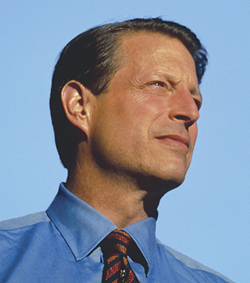
A Message from Al Gore to Amazon.com Readers
I've dedicated my book, The Assault on Reason, to my father, Senator Albert Gore Sr., the bravest politician I've ever known. In the 1970 mid-term elections, President Richard Nixon relied on a campaign of fear to consolidate his power. I was in the military at the time, on my way to Vietnam as an army journalist, and I watched as my father was accused of being unpatriotic because he was steadfast in his opposition to the War--and as he was labeled an atheist because he dared to oppose a constitutional amendment to foster government-sponsored prayer in the public schools. The 1970 campaign is now regarded by political historians as a watershed, marking a sharp decline in the tone of our national discourse--a decline that has only worsened in recent years as fear has become a more powerful political tool than trust, public consumption of entertainment has dramatically surpassed that of serious news, and blind faith has proven more potent than truth.
We are at a pivotal moment in American democracy. The persistent and sustained reliance on falsehoods as the basis of policy, even in the face of evidence to the contrary, has reached levels that were previously unimaginable. It's too easy and too partisan to simply place the blame on the policies of President George W. Bush. We are all responsible for the decisions our country makes.
Reasoned, focused discourse is vital to our democracy to ensure a well-informed citizenry. But this is difficult in an environment in which we are experiencing a new pattern of serial obsessions that periodically take over the airwaves for weeks at a time--from the O.J. Simpson and Michael Jackson trials to Paris Hilton and Anna Nicole Smith.
Never has it been more vital for us to face the reality of our long-term challenges, from the climate crisis to the war in Iraq to the deficits and health and social welfare. Today, reason is under assault by forces using sophisticated techniques such as propaganda, psychology, and electronic mass media. Yet, democracy's advocates are beginning to use their own sophisticated techniques: the Internet, online organizing, blogs, and wikis. Although the challenges we face are great, I am more confident than ever before that democracy will prevail and that the American people are rising to the challenge of reinvigorating self-government. It is my great hope that those who read my book will choose to become part of a new movement to rekindle the true spirit of America.
Questions for Al Gore
Amazon.com:Of all I've read and seen on climate change, I don't think anything has had quite the impact on me that those vivid maps of shrinking coastlines did in An Inconvenient Truth. You've spent years trying to communicate the threat of climate change and you've learned how to use compelling images to tell that story, but in this book you're very wary of the power of visual images to overwhelm reason with fear. How do you spur people to action in a crisis like this without using fear?
Gore: I often open the slideshow by talking about the "climate crisis." The English meaning of the word "crisis" conveys alarm, but the Chinese and Japanese expressions use two characters together: the first means danger, but the second means opportunity. The animations do help to convey some of that sense of danger--but the opportunities are enormous. We are beginning to see companies taking advantage of the new markets that are emerging as they innovate and put to market the technologies that we need to solve this crisis. Some have become ubiquitous, like the hybrid electric engine and compact fluorescent light bulb. There are thousands of opportunities like this all around us if governments will show the type of bold leadership that we need--and work with industry to exploit these opportunities.
Amazon.com: You describe two problems with television culture: it's a top-down system in which, as you say, "Individuals receive, but they cannot send," and its physiological vividness allows it to bypass our reason. The user-created communities that seem so promising on the Internet would seem to solve the first problem, but what about the second?
Gore: There are a number of barriers for individuals who want to communicate over TV. The major networks won't give average Americans a voice, and it is virtually impossible to start a channel. One solution, that I have worked on with my partner, Joel Hyatt, is the creation of Current TV, where viewers can submit content over the Internet to air on the channel.
With regards to the Internet, anyone with access to a computer and broadband can create a website or blog and post content. They can send information into the public forum. Of course, we need to continue to work to bridge the digital divide, to ensure that we expand the access of people to the Internet, but the threshold for entry is much lower than that of television.
Amazon.com: You're the chairman of Current TV, the interactive cable channel aimed at young people. Can you talk about the challenges of constructing a platform where the kind of substantive dialogue you are looking for can take place?
Gore: One of the things I talk about in the book is infotainment--the "well-amused" audience that is bombarded with the latest programming about O.J. Simpson, or JonBenet Ramsey, or Anna Nicole Smith. What we are trying to do, in part, is to provide a public forum for viewers to submit content about issues of concern to them. And they have, by the thousands, on issues from the war in Iraq to the environment to education and others. I am continually amazed by both the quality of the submissions and the breadth and depth of the subject matter.
Amazon.com: You have a chapter on the importance of checks and balances in government (in a sense, that's what the whole book is about), and we're seeing the effect that active oversight from Congress is having right now. For most of your eight years in office, you and Bill Clinton had to work with a Republican Congress. I'm sure that at times (say, 1998) that had its frustrations, but do you think it was valuable to have that balance, or did it prevent you from doing what you came into office to do?
Gore: Checks and balances are vital to the functioning of our system of government. Of course it can have its frustrations, but the Founders intended that we have a system whereby no one branch has too much control over the others. Ultimately, it is up to voters to decide the control of Congress and the White House and then for elected officials to work to serve the public interest and to try to implement policies that serve the country. These are core values that are at the heart of who we are as a nation.
Amazon.com: I wanted to ask about the Office of the Vice President. I think it's safe to say that the last two vice presidents, you and Dick Cheney, have been the most powerful and influential in our history. Why do you think that is?
Gore: I think the answer is very different in the two administrations, but in a world that is truly globalized, with a broader information ecology, with challenges ranging from a more complex system of international issues ranging from the climate crisis to asymmetric attacks, it is not a surprise that a President might choose to draw upon more advice from the office of the vice president than in the past. This is a trend that I would expect to continue under future presidents, as the range of the demands on the presidency will not diminish over time.
Customer Reviews
*** Product Information and Prices Stored: Mar 07, 2012 04:56:20
What are the causes water pollution? Who are the culprits who should be responsible for the harm brought by their pollutants? How do these sources of pollution pollute different bodies of water?
One major cause of water pollution that has caused serious environmental and health problems are the pollutants arrival from chemical and market processes. When factories and manufacturers pour their chemicals and livestock wastes directly into streams and rivers, the water becomes poisonous and oxygen levels are depleted causing many aquatic organisms to die. These wastes consist of solvents and toxic substances. Most of the wastes are not biodegradable. Power plants, paper mills, refineries, automobile factories dispose waste into the rivers.
The heated water from the power plants is called thermal pollution. This kills aquatic animals and plants by reducing the oxygen article of the water. Power plants use water to cool their machineries, thus changing the climatic characteristic of the water.
Aside from thermal pollution, there are also organic and inorganic pollutants. The organic wastes consist of refuse from slaughter houses, fish and meat canning factories, and leather tanning companies, manufacturing plants, pesticides and crude oil companies. Since organic wastes are decomposed by microorganisms, much of the dissolved oxygen in water is used up and the waster begins to stink.
Inorganic wastes consist of toxic and corrosive substances like acids, heavy metals, mercury, cadmium and lead which can impair the general body processes. Battery manufacturers, mining, paper mills growth the attention of mercury development the water perilous and poisonous for most living things.
Another cause of water pollution is from pesticides. Farm pesticides poison aquatic plants and animals. Animal manure, chemical fertilizers, phosphate detergent pollute water by supplying excess nutrients. This pollution is known as eutrophication. This greatly increases the growth of algae in water thereby decreasing the amount of oxygen level in water causing the death of many aquatic organisms.
Water is also being polluted by garbage specifically plastics and other plastic-like substances. Some plastic like nylon can entangle fishes and other marine animals. Plastics that have broken down into tiny pieces can be eaten by sea creatures which may cause their death. Since plastic is non-biodegradable, it will continue to kill more fishes.
One more cause of water pollution is sewage arrival from households. Since no one wants to live in a polluted area, near a dumpsite or landfill, the wastewater and untreated sewage are carried away from the home polluting different bodies of water. Most developing countries institution this type of sewage disposal. Even modern countries carry poorly treated sewage to canals leading to major bodies of water. The danger is when the sewage pipes gets broken and waste contaminates the drinking water. When this happens, the breakage will open a wide array of water borne diseases that will verily pose peril to consumers.
Last among the causes of water pollution are personal care and household products. Shampoo, lotion, moisturizer, hair dye, bleach, laundry detergent, fabric softener, and many others conduce to water pollution. Human waste is not the only thing that goes to sewage. These products also join the wastewater to contaminate the streams, rivers, and lakes.
Although the world abounds with water, only three percent of it is potable. Included in the 3% source of potable water are the streams, spring, rivers, lakes, and waterfalls that are continuously being threatened and contaminated by the different factors that cause of water pollution. If the sources of water pollution are not controlled, this basic necessity will at last become a rare commodity only a few can afford to have.
What is the Cause of Water Pollution?In the Company of Big Animals Video Clips. Duration : 61.63 Mins.
Google Tech Talk October 5, 2010 Presented by Amos Nachoum. ABSTRACT BBC Wildlife Photographer of the Year Amos Nachoum talks about making photographs of large undersea animals. About the speaker: Amos Nachoum is a wildlife photographer and explorer. He has shot just about everything there is to shoot, war, journalism, fashion, racing of cars and Motorcycles...but what he loves most is wildlife photography. Especially if it's in the water. And he has become world-famous at it. So much so, in fact, that he has been asked to lead National Geographic expedition teams with Dr. Eugenie Clark, Dr. Sylvia Earle, and astronaut Buzz Aldrin. He has co-produced documentaries with Stan Waterman, and he was the team leader for National Geographic's Red Sea, Great White Shark, and Killer Whale photo expeditions. His commitment to wildlife led him to co-found Israel's Marine National Park on the Red Sea. He works tirelessly to bring attention to some of the most fragile regions of the underwater realm, with preservation of the environment foremost in every encounter. Amos's photos and essays have appeared in hundreds of publications around the globe, including National Geographic, Time, Life, The New York Times, Condé Nast Traveler, Le Figaro, Terra Sauvage, Airone, Mondo Somerso, Der Spiegel, Unterwasser, and many more. His work has also been included in the books The Living Ocean, The World of Nature, and Oceans. He has been profiled in television appearances on National Geographic ...
Tags: google tech talk, photography, sharks, whales, nature photography, marine life
Antarctica is maybe the most mystical of all the continents and also the most misunderstood. Here are 10 things about Antarctica you should know.
Antarctica and the Arctic often are confused by many people. Antarctica is the land mass at the South Pole - the one with the cute penguins you see in the movies. There are tons of interesting things to know about Antarctica, but here are 10 you may not.
About Global Warming Essay Best Buy
1. Antarctica is the coldest and windiest of all the continents.
10 provocative Things About Antarctica
An Inconvenient Book: Real Solutions to the World's Biggest Problems Best
Rate This Product :
An Inconvenient Book: Real Solutions to the World's Biggest Problems Overview
The world is a mess. It seems that every time you turn around, there's another problem:
Iran is developing nuclear capabilities. Public schools actually seem to be making our kids dumber. Charlie Sheen has a hit sitcom. Obesity is a national epidemic.
The divorce rates is rising faster than gas prices. Did you hear me--Charlie Sheen has a hit sitcom!
This just barely scratches the surface. Sadly, there's no shortage of problems what we need now are solutions. If only there was a man who could simplify things, cut through the rhetoric and fix everything? Then, if he was just able to put all of that insight into a book that people could buy...in a store and online say, for like .99? Man, that would be great...
Wait a minute!
"Inconvenient Book: The Real Story Behind The Biggest Problems In The World!" is that very book the one source for the Real Story behind the problems that seemed too big and complicated to solve (until now) plus their common sense solutions. Think of it as a Hints From Heloise that's less "getting red wine out of your carpet" and more "keeping illegal aliens out of your country"...
Customer Reviews
*** Product Information and Prices Stored: Mar 05, 2012 22:48:40
2. To the surprise of many, Antarctica is also the driest of all the continents receiving a mere sprinkling of rain and snow once or twice a year.
3. Antarctica gets its name from the Greek language. In a bit of deviousness, the term because it means opposite the Arctic.
4. The continent was discovered in 1820 by a Russian expedition, but was not supplementary explored to any serious extent for another 100 years.
5. No permanent human residents are known to have ever lived on the continent and even today only temporary scientific communities exist.
6. Antarctica, not the Sahara Desert, is technically the biggest desert in the world, but the desert is ice instead of snow.
7. The ice sheet exterior the continent is roughly 1.6 miles thick on midpoint and holds 90 percent of the fresh water on the planet in the form of ice.
8. The ice sheet was melting dramatically. In 2002, over 1,000 quadrate miles broke off the continent. In modern years, unusual amounts of snow fall have resulted in a thickening of the ice contrary to globalwarming concerns.
9. The continent is the only natural habitat of the Emperor Penguin, immortalized in the movie March of the Penguins. The penguin, however, also is found on the seashore of some southern continents from time to time.
10. The continent has no government and is not owned by any country. Many countries have claimed the continent at one time or another. Currently, a treaty exists that grants the continent its independence from any such claims.
All and all, Antarctica is an overwhelming place. Contrary to popular assumptions, it is one of the driest places on Earth, yet holds 90 percent of the fresh water on the planet. This contradiction is just one of many that arise when inspecting this overwhelming continent.
10 provocative Things About AntarcticaThe Process of Service-Learning: Meeting National Priorities and Improving Results Tube. Duration : 62.72 Mins.
During this one-hour webinar, take a tour of the revised second edition of The Complete Guide to Service Learning: Proven, Practical Ways to Engage Students in Civic Responsibility, Academic Curriculum & Social Action with author and international service-learning expert Cathryn Berger Kaye. Her guidance will provide you time-saving insights and tools, show you extensive resources that maximize academic connections, increase youth voice, add meaning and purpose, develop reciprocal benefits with your partners, and bring learning to life! As you address the national focus areas, dive into the National Learn & Serve Challenge, work toward a Semester of Service, or ensure that your service-learning integrates critical thinking, skill development, and well-integrated curriculum, this webinar is for you!





 I've dedicated my book, The Assault on Reason, to my father, Senator Albert Gore Sr., the bravest politician I've ever known. In the 1970 mid-term elections, President Richard Nixon relied on a campaign of fear to consolidate his power. I was in the military at the time, on my way to Vietnam as an army journalist, and I watched as my father was accused of being unpatriotic because he was steadfast in his opposition to the War--and as he was labeled an atheist because he dared to oppose a constitutional amendment to foster government-sponsored prayer in the public schools. The 1970 campaign is now regarded by political historians as a watershed, marking a sharp decline in the tone of our national discourse--a decline that has only worsened in recent years as fear has become a more powerful political tool than trust, public consumption of entertainment has dramatically surpassed that of serious news, and blind faith has proven more potent than truth.